
Spinal
Stem cell therapy for herniated discs: what the evidence says
How image-guided stem cell delivery works, who may benefit, and where the evidence is still developing.
Read article →Advanced mesenchymal stem cell therapy for herniated discs, degenerative disc disease, spinal stenosis, and chronic back pain. A non-surgical option that may help reduce pain, at our INVIMA-regulated clinic in Medellín, Colombia.




Stem cells are delivered to damaged intervertebral discs with the aim of supporting the body's repair processes and calming inflammation around irritated nerves. Evidence is promising but still developing.
A minimally invasive option to explore before fusion, laminectomy, or disc replacement. No hospital stay, no hardware. For some people it may help delay surgery; it does not replace surgery when that is indicated.
Cortisone often wears off in weeks. Stem cell therapy aims to calm inflammation and support tissue healing, and some patients report relief that lasts longer. Results vary.
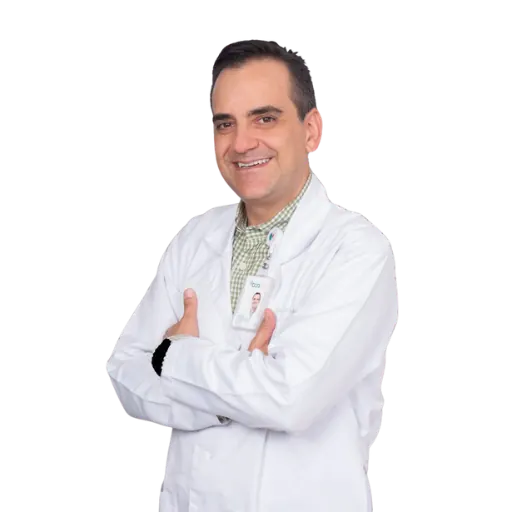
Dr. Alejandro Giraldo Agudelo is a physician specializing in pain management and palliative care, with 9+ years of experience treating chronic pain of both oncologic and non-oncologic origin. His clinical focus is the comprehensive evaluation of patients with complex spinal and nerve pain conditions.
Trained across Colombia, Puerto Rico, and the United States — including neuromodulation training in Orlando, New York, and Florida — Dr. Giraldo brings broad interventional pain experience to every spinal case.
Our spinal stem cell protocols are used for degenerative, structural, and nerve-compression conditions. Results vary by condition and patient.
Stem cell injections may help reduce disc-related pain and inflammation for some patients. For some people they may help delay a discectomy or microdiscectomy, but they are not a substitute when surgery is indicated.
Targeted stem cell therapy that may help ease pain from degenerating discs in some patients. It does not reverse disc degeneration, and evidence is still developing.
May help calm inflammation around nerves in the narrowed spinal canal, which can ease symptoms and improve mobility for some patients. It does not widen the canal itself.
A regenerative option for persistent back pain when cortisone shots and pain medication haven't been enough. Results vary.
Stem cells may help reduce inflammation around compressed nerves, which can ease radiating leg pain, numbness, and tingling for some patients.
For patients whose previous spinal surgery didn't resolve pain — stem cell therapy may help reduce residual pain for some; evidence in this group is limited.
Our spinal protocols combine advanced imaging, complementary therapies, and precision stem cell delivery, with follow-up to track how you respond.
Advanced MRI analysis, physical evaluation, and health history review to identify the exact source of your spinal condition. Virtual pre-consultation available before you travel.
Pre-treatment hyperbaric oxygen therapy delivers concentrated oxygen, intended to help settle inflammation as part of the protocol.
A pre-treatment intravenous infusion of high-potency vitamins, anti-inflammatory compounds, and nerve-supporting nutrients, intended to support your body ahead of treatment.
Precision injection of mesenchymal stem cells directly into the damaged disc or spinal area using fluoroscopic or ultrasound guidance. Cells are sourced from our INVIMA-certified laboratory and dosed for your specific condition.
Post-procedure monitoring, prescribed rest protocol, and scheduled telemedicine consultations to track your pain levels and function over the months ahead.

Spinal stem cell therapy works best for patients with chronic back pain and disc damage who are exploring non-surgical options. Results vary. Ideal candidates include:
Not sure if you qualify? Our physician reviews your imaging and history during a free virtual consultation — before you book any travel.
Book Free Consultation
Outpatient injection with imaging guidance, prescribed rest. Stay at your Medellín accommodation and rest as advised.
Post-injection soreness settles; some patients begin to notice early relief. Most patients fly home within 5–7 days and resume light activities. Avoid heavy lifting during this phase.
Many patients who respond notice gains in mobility and less pain by this stage; others notice little or no change. Telemedicine follow-up with our team.
Where there is a benefit, it is usually clearest by now. Many responders report less back pain and better mobility; how long relief lasts varies from person to person.
It does not fix a herniated disc in a structural sense. For some patients, stem cell injections may help reduce disc-related pain and inflammation, and for some people may help delay surgery; they are not a replacement for surgery when it is indicated. Evidence is promising but still developing, and results vary. Our physician evaluates your imaging to determine candidacy during a free consultation.
Cortisone mainly suppresses inflammation, and its effect often fades within weeks. Stem cell therapy aims to support the body's repair processes and calm inflammation, and some patients report longer-lasting relief; the evidence is still developing and results vary.
Most patients return to light activities within days. We recommend avoiding heavy lifting for 2–4 weeks to protect the treated area while it settles.
Treatment costs 60–75% less than comparable therapy in the US. Contact us for a transparent, personalized quote based on the number of discs being treated.
Possibly. Failed back surgery syndrome is one of the conditions we evaluate. For some patients, stem cell therapy may help reduce residual pain; evidence in this group is limited and results vary.
We recommend 5–7 days for spinal treatment, allowing time for consultation, procedure, follow-up, and initial recovery before your return flight.
How image-guided stem cell delivery works, who may benefit, and where the evidence is still developing.
Read article →What to expect from consultation to recovery — flights, cost, protocols, and aftercare.
Read article →A transparent breakdown of what drives the price difference — and what stays the same.
Read article →