
Orthopedic
Can stem cells delay knee replacement? What the evidence says
Where mesenchymal stem cells may help, where the evidence is still thin, and when surgery remains the right call.
Read article →Advanced mesenchymal stem cell therapy targeting joint degeneration, cartilage damage, and orthopedic conditions. A non-surgical option that may help you get back to an active lifestyle, at our clinic in Medellín, Colombia.




Image-guided stem cell injections that aim to support the body's own repair processes. No general anesthesia, no hospital stay.
Most patients return to normal activities within days, not months. Outpatient procedures with minimal downtime for most patients — ideal for international patients.
For patients who respond, benefits may build over several months as inflammation settles. Evidence is promising but mixed, and results vary.
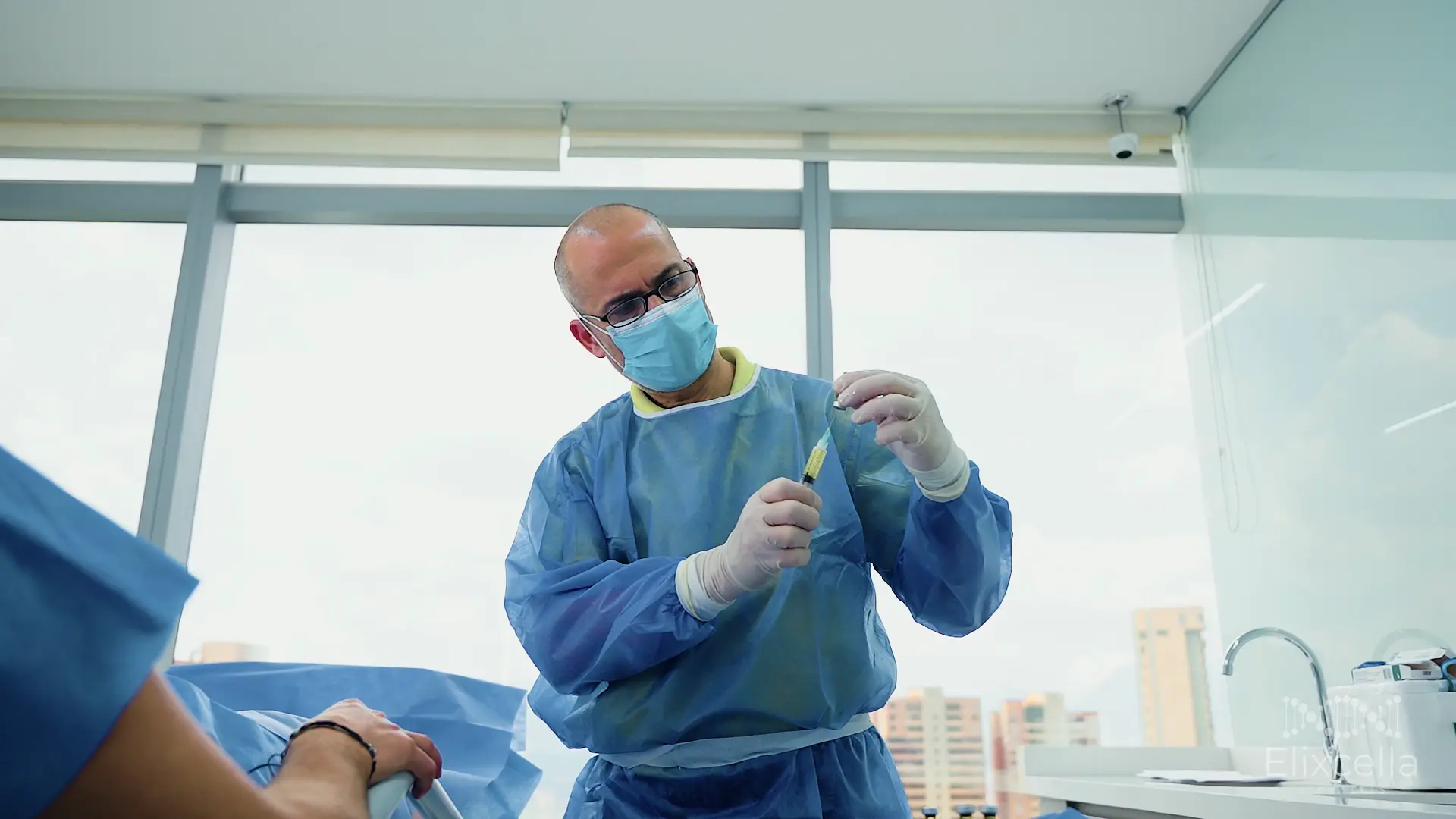
Dr. Felipe Vargas is a licensed physician specializing in regenerative and orthopedic medicine with extensive experience treating joint degeneration, sports injuries, and chronic musculoskeletal conditions using mesenchymal stem cell protocols.
With a patient-centered approach and years of clinical practice in Medellín, Dr. Vargas combines advanced imaging diagnostics with precision-guided stem cell delivery, tailoring each plan to the patient.
Individual experience; results vary and not everyone responds.
"Two orthopedic surgeons in the US told me my only option was knee replacement. After one round of therapy in Medellín I was hiking again within 8 weeks. The team at Colombia Care made the entire process seamless — from consultation to follow-up back home."
Our orthopedic stem cell protocols address a range of degenerative and injury-related conditions.
The most common reason patients visit us. Stem cell injections may help reduce pain and improve function for some patients; they do not regrow cartilage or reverse arthritis.
Targeted injections that may help ease hip pain and stiffness for some patients. Evidence for the hip is more limited than for the knee, and they do not reverse joint wear.
Rotator cuff tears, labral damage, and frozen shoulder — regenerative therapy may support healing alongside rehab; it does not replace surgical repair when that is needed.
Focal cartilage lesions from sports or aging are one of the areas where mesenchymal stem cell protocols are being studied; some patients report less pain and better function, though results vary.
For some partial meniscus tears, regenerative support may help ease symptoms and support healing; for some people it may help delay arthroscopic surgery, but it is not a substitute when surgery is indicated.
Chronic tendon inflammation and micro-tears in the elbow may respond to stem cell injections, which may help reduce pain and improve grip strength for some patients.
Our orthopedic protocols go beyond stem cells — combining advanced diagnostics, complementary therapies, and structured rehabilitation for optimal results.
Every treatment begins with advanced MRI imaging to map the exact location and severity of joint damage — ensuring stem cells are delivered exactly where they're needed most.
Before your injection, hyperbaric oxygen therapy floods tissues with concentrated oxygen — intended to prime the treatment area and help settle inflammation as part of the protocol.
A pre-treatment intravenous infusion of high-potency vitamins, minerals, and anti-inflammatory compounds intended to support your body ahead of treatment.
Image-guided mesenchymal stem cell injections target damaged cartilage, tendons, and joint tissue. Cells are sourced from our INVIMA-certified laboratory, quality-tested, and dosed specifically for your condition.
A structured rehabilitation program to progressively restore range of motion, strengthen supporting muscles, and get the most from your treatment over the weeks following your procedure.

Orthopedic stem cell therapy works best for patients with mild to moderate joint degeneration who are exploring non-surgical options. Results vary. Ideal candidates include:
Not sure if you qualify? Our physician reviews your imaging and history during a free virtual consultation — before you book any travel.
Book Free Consultation
Outpatient injection, mild swelling, prescribed rest. You stay at your Medellín accommodation and enjoy the city at a relaxed pace.
Post-injection soreness settles; some patients begin to notice early relief. Gentle movement and guided exercises recommended. Most patients fly home within 5–7 days.
Many patients who respond notice gains in mobility and less pain by this stage; others notice little or no change. Follow-up via telemedicine with our team.
Where there is a benefit, it is usually clearest by now. Many responders report better joint function and less stiffness; results vary and are not permanent for everyone.
Not as a rule. For some patients with mild to moderate osteoarthritis, meniscus tears, or cartilage damage, stem cell therapy may help reduce pain and could help delay surgery; it is not a replacement for knee replacement when that is indicated, and results vary. Our physician evaluates your imaging to determine candidacy during a free consultation.
The injection itself takes 30–45 minutes. Including preparation and monitoring, expect about 2 hours at the clinic. It is an outpatient procedure — you return to your accommodation the same day.
Many patients who respond notice less pain and better mobility within 4–8 weeks; others notice little or no change. Any improvement may continue to build over 6–12 months. Stem cell therapy does not regrow cartilage or reverse arthritis, and results vary.
Treatment in Medellín costs 60–75% less than comparable therapy in the United States, without compromising on cell sourcing, physician credentials, or facility standards. Contact us for a transparent, personalized quote.
Most patients describe mild discomfort similar to a standard joint injection. Local anesthesia is applied before the procedure. There is no general anesthesia and no surgical incisions.
We recommend 5–7 days for a single joint treatment. This allows time for your initial consultation, the procedure itself, a follow-up check, and recovery in our spring-like climate before flying home.
Where mesenchymal stem cells may help, where the evidence is still thin, and when surgery remains the right call.
Read article →What to expect from consultation to recovery — flights, cost, protocols, and aftercare.
Read article →A transparent breakdown of what drives the price difference — and what stays the same.
Read article →