
Pain
Stem cells for chronic pain: what the evidence says about inflammation and relief
How regenerative therapy may help when painkillers fall short, and where the science is still uncertain.
Read article →Stem cell therapy that aims to calm inflammation and support the body's repair processes, and may help some patients with chronic pain improve their quality of life, at our INVIMA-regulated clinic in Medellín, Colombia.



Where pain medications mainly manage symptoms, stem cell therapy aims to calm the inflammatory processes involved in some chronic pain and support tissue healing. Results vary.
Mesenchymal stem cells release anti-inflammatory signals that may help modulate overactive pain pathways and chronic inflammation. Evidence is promising but mixed and still developing.
Patients who respond often report better mobility, energy, and quality of life, and some are able to reduce their pain medication with their doctor's guidance. Not everyone responds.
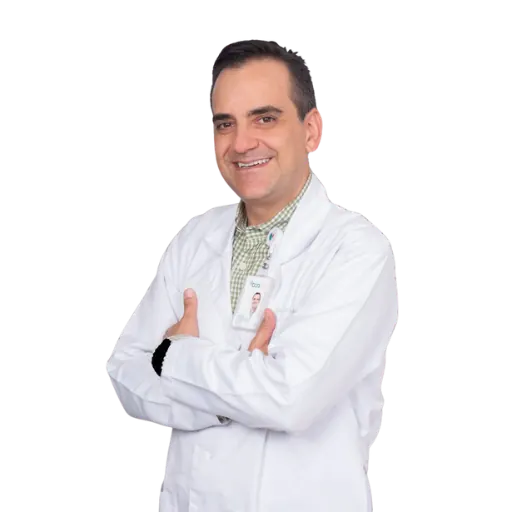
Dr. Alejandro Giraldo Agudelo is a physician specializing in pain management and palliative care, with 9+ years of experience treating chronic pain of both oncologic and non-oncologic origin. His clinical focus is the comprehensive evaluation of patients with complex, treatment-resistant pain conditions.
Trained across Colombia, Puerto Rico, and the United States — including neuromodulation training in Orlando, New York, and Florida — Dr. Giraldo brings broad interventional pain experience to every chronic pain case.
Our chronic pain protocols are used for selected systemic and localized pain conditions. Evidence varies by condition, and results vary by patient.
Stem cell therapy may help reduce inflammation and modulate the immune response; some fibromyalgia patients report better quality of life, though clinical evidence is still early.
For burning, tingling, and shooting pain that hasn't responded to conventional medication, regenerative therapy may help ease nerve-related inflammation in some patients. Evidence is still developing.
Stem cells may help calm chronic inflammatory processes that keep pain cycles going in some patients. Results vary.
Regenerative protocols for CRPS that aim to reduce nerve inflammation and may help improve pain and limb function for some patients. Evidence for CRPS is limited.
We do not offer stem cell therapy as a treatment for rheumatoid arthritis or other autoimmune diseases: the evidence is still insufficient. Please keep working with your rheumatologist.
For persistent pain from old injuries or surgeries where tissues never fully healed, regenerative therapy may support tissue healing in some patients.
Our chronic pain protocols combine advanced diagnostics, complementary therapies, and precision stem cell delivery, with follow-up to track how you respond.
Comprehensive evaluation to identify all sources and triggers of your chronic pain. We assess inflammation markers, nerve function, imaging, and medical history to create a complete picture — often starting with a free virtual consultation.
Pre-treatment hyperbaric oxygen therapy delivers concentrated oxygen, intended to help settle inflammation as part of the protocol.
A pre-treatment intravenous infusion of high-potency vitamins, anti-inflammatory compounds, and nerve-supporting nutrients, intended to support your body ahead of treatment.
IV infusion and/or targeted injections deliver mesenchymal stem cells to affected areas. Cells are sourced from our INVIMA-certified laboratory, quality-tested for viability, and dosed precisely for your pain profile.
Post-treatment monitoring, pain-score tracking, and scheduled telemedicine consultations to track inflammatory markers, medication use, and quality of life over the months ahead.

Chronic pain stem cell therapy may suit patients with treatment-resistant pain who want to explore options beyond medication. Results vary. Ideal candidates include:
Not sure if you qualify? Our pain specialist reviews your medical history and condition during a free virtual consultation — before you book any travel.
Book Free Consultation
IV infusion and/or targeted injections in a comfortable outpatient setting. Rest at your Medellín accommodation as advised. No hospital stay required.
Some patients begin to notice early relief; others take longer or don't respond. Most patients fly home within 5–7 days. Among those who respond, sleep and energy are often the first changes noticed.
Many patients who respond notice better daily function and quality of life by this stage; others notice little or no change. Telemedicine follow-up with our team.
Where there is a benefit, it is usually clearest by now. Many responders report better quality of life, less reliance on medication, and improved mobility; how long it lasts varies.
Possibly, for some patients. Stem cell therapy may help reduce inflammation and modulate the immune response, which could be relevant to fibromyalgia, but clinical evidence is still early and limited. Some patients report improvement in pain and quality of life; others don't.
Pain medications mainly manage symptoms while you take them. Stem cell therapy aims to calm inflammation and support the body's repair processes, and some patients report longer-lasting relief. It is not a guaranteed alternative to medication, evidence is still developing, and results vary.
Many patients start with 1–2 sessions; how much improvement you notice, if any, varies. Your specialist will recommend a protocol based on your condition, pain severity, and response to initial treatment during your consultation.
Treatment costs 50–70% less than comparable therapy in the US. Contact us for a transparent, personalized quote based on your specific condition and treatment plan.
Most patients describe mild discomfort. Local anesthesia is used for targeted injections. IV infusions are painless. The procedure takes place in a comfortable outpatient setting.
We recommend 5–7 days, allowing time for evaluation, treatment, follow-up, and initial recovery. Most patients fly home within this timeframe and continue their recovery with telemedicine support.
How regenerative therapy may help when painkillers fall short, and where the science is still uncertain.
Read article →What to expect from consultation to recovery — flights, cost, protocols, and aftercare.
Read article →A transparent breakdown of what drives the price difference — and what stays the same.
Read article →